
 See Our Latest Article on HelloNation
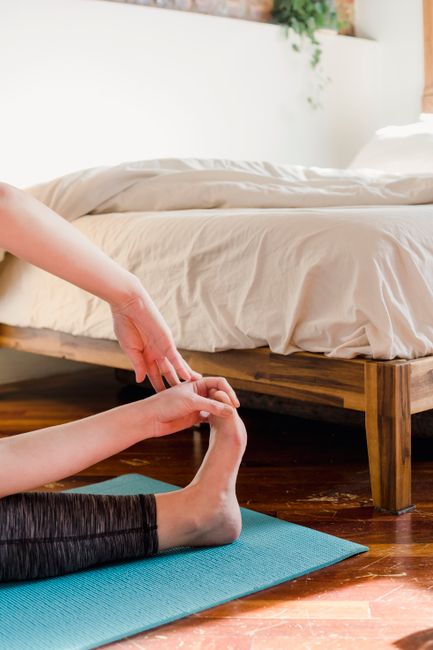
Why mornings can feel stiff
Morning stiffness is often related to staying in one position for several hours, reduced circulation during sleep, or tight muscles around the hips, back, shoulders, and legs. A cold winter morning, a soft mattress, or sleeping in an awkward position may make that stiffness more noticeable for local residents.
Gentle movement can help restore mobility, but stretching should not be forced. The goal is to create a comfortable sense of motion rather than to push through pain or achieve a deep stretch immediately after getting out of bed.
A short routine of five to ten minutes may be enough. Move slowly, breathe normally, and stop if symptoms become sharp, severe, or progressively worse.
What should be done before stretching?
Start with easy movement instead of immediately reaching for an intense stretch. Sit on the edge of the bed, place both feet on the floor, and take several relaxed breaths. Roll the shoulders gently, open and close the hands, and move the ankles in small circles.
If the room is chilly, add a light layer of clothing before beginning. Muscles may feel less responsive when the body is cold, especially during winter. A few minutes of walking around the bedroom or kitchen can also help warm the body.
Avoid bouncing, jerking, or forcing a joint into a position that feels restricted. A stretch should feel mild to moderate, not painful.
Which stretches are useful for the back and hips?
The following movements are appropriate for many adults without a recent injury or medical restriction. Each can be performed slowly and repeated two to five times.
Knee-to-chest stretch
Lie on the back with both knees bent and the feet supported.
- Bring one knee toward the chest using both hands behind the thigh or over the shin.
- Hold for about 10 to 20 seconds while keeping the shoulders relaxed.
- Lower the leg and repeat on the other side.
- If comfortable, bring both knees toward the chest without pulling aggressively.
This movement may gently reduce tension in the lower back and buttock area. It should not produce shooting pain down the leg.
Pelvic tilts
Remain on the back with the knees bent and feet flat.
- Gently tighten the abdominal muscles.
- Flatten the lower back toward the bed or floor without holding the breath.
- Relax and allow the natural curve of the back to return.
- Repeat slowly for several repetitions.
Pelvic tilts are not a forceful stretch. They are a controlled way to introduce movement to the spine and abdominal area after several hours of stillness.
Cat-cow movement
Begin on the hands and knees, using a folded towel under the knees if needed.
- Place the hands beneath the shoulders and the knees beneath the hips.
- Slowly round the back while allowing the head to follow the movement.
- Then gently move toward a comfortable arch without dropping the abdomen forcefully.
- Continue for five to eight slow repetitions.
The range of motion can be small. For people who feel unsteady on the floor, the same general motion can be performed standing with the hands resting on a sturdy counter.
Hip flexor stretch
Tight hip flexors can contribute to a feeling of restriction when standing after sleep or prolonged sitting.
- Step one foot forward and place the opposite knee on a padded surface, or remain standing in a split stance.
- Keep the torso upright.
- Gently shift the pelvis forward until a stretch is felt at the front of the back hip.
- Hold for 15 to 20 seconds and switch sides.
Do not arch the lower back to create a deeper sensation. The movement should come from a small shift of the hips.
Hamstring stretch
The hamstrings are located along the back of the thighs and may feel tight in the morning.
A standing version is often practical:
- Place one heel on a low, stable surface.
- Keep the knee slightly bent.
- Hinge forward from the hips while maintaining a long, comfortable back.
- Hold for 15 to 20 seconds and change sides.
Avoid placing the foot on a high surface or rounding deeply through the spine. A seated or lying version may be easier for people with balance concerns.
How can the neck and shoulders be included?
People who work at desks, drive regularly, or sleep with the head turned may notice neck and shoulder stiffness in the morning.
Try these gentle movements:
- Turn the head slowly to look over one shoulder, then the other.
- Tilt one ear toward the shoulder without lifting the shoulder.
- Draw the shoulders up, back, and down in a slow circle.
- Bring the shoulder blades gently together for five seconds, then relax.
Repeat each movement several times. Do not pull on the head or make fast neck circles. Tingling, numbness, dizziness, or pain spreading into an arm is a reason to stop.
Should stretching be done in bed or after getting up?
Either option can work, depending on comfort and balance. Gentle knee movements, ankle circles, and pelvic tilts can be done in bed. Standing stretches and walking are better performed after getting up, when the body is more stable and the surrounding muscles have begun to warm.
A useful sequence is:
1. Move gently in bed for one or two minutes.
2. Sit up and pause before standing.
3. Walk around briefly.
4. Perform standing stretches for the hips, legs, shoulders, and neck.
This gradual approach may be especially helpful in homes where floors are cold or slippery during winter. Supportive footwear can reduce the chance of losing balance on hard surfaces.
Can stretching prevent all morning pain?
No. Stretching may improve mobility and temporarily reduce stiffness, but it cannot correct every cause of morning pain. Symptoms may also be influenced by sleep position, mattress support, muscle weakness, arthritis, nerve irritation, inflammation, or an injury.
It is also a misconception that a deeper stretch is automatically more effective. Consistent, comfortable movement is generally more useful than occasional aggressive stretching. Strengthening the trunk, hips, and upper back may also be needed when stiffness keeps returning.
Long periods of bed rest are usually not helpful for uncomplicated back discomfort. Gentle walking and regular daily movement can support recovery, provided they do not worsen symptoms.
When should morning stretches be avoided?
Stop the routine if pain becomes sharp, intense, or steadily increases. Extra caution is needed after surgery, a significant fall, a recent accident, or a new injury. People who are pregnant or managing osteoporosis, inflammatory conditions, balance problems, or known spinal disorders may need modified movements.
Urgent medical evaluation is appropriate for back pain accompanied by new loss of bladder or bowel control, numbness around the groin, severe or progressive leg weakness, fever, unexplained weight loss, or major trauma.
For symptoms that persist, repeatedly interrupt sleep, or spread down an arm or leg, an individualized assessment can help determine whether stretching is appropriate and which movements should be adjusted.
A simple five-minute routine
For a practical start to the day, try:
- One minute of relaxed walking
- Five pelvic tilts
- Three knee-to-chest movements on each side
- Five cat-cow repetitions
- A 15-second hip flexor stretch on each side
- Gentle shoulder rolls and neck turns
The routine should leave the body feeling more mobile, not aggravated. If a particular movement consistently causes discomfort, remove it rather than trying to stretch through the symptom.
